01
The welcome desk
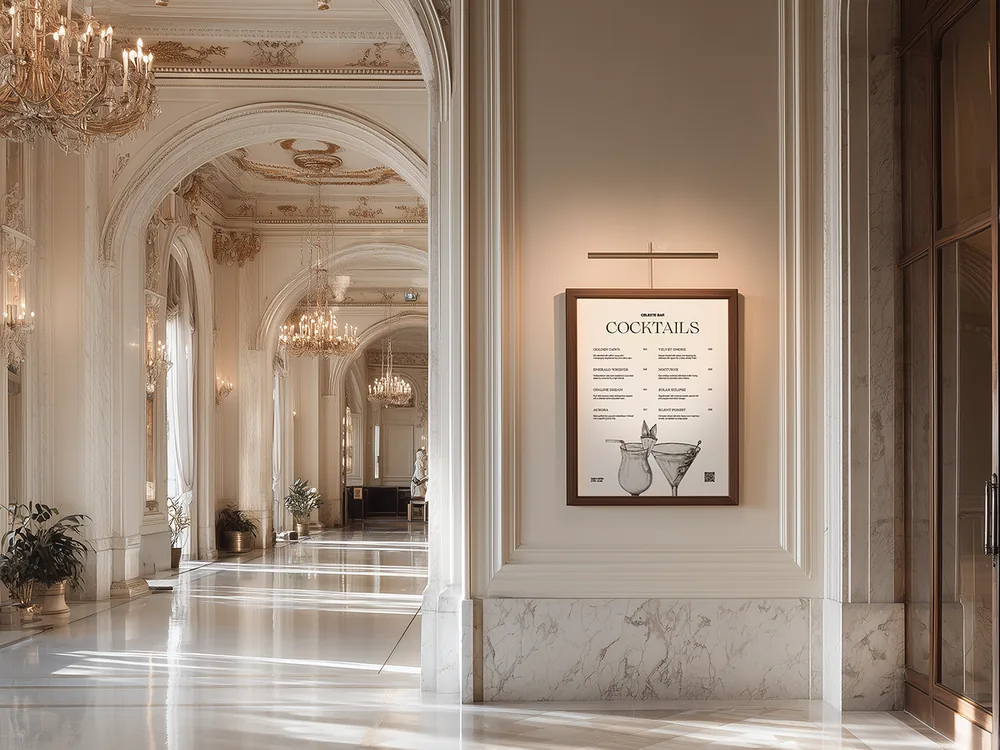
The venue carries the event’s identity from the first minute. It was published the evening before, not delivered in a van.

Spaces / Events
The problem
Rebranding a venue for an event is three jobs, not one: printing, mounting and dismounting. It is ordered a fortnight ahead, which means the running order is already frozen before anyone arrives. A speaker cancels, a sponsor is added, a room changes name, and the printed signage is simply wrong for the whole weekend. On Monday all of it goes in a skip. For a venue that sells itself on flexibility, the signage is the least flexible thing in the building, and the one guests read first.
Three moments
01
The venue carries the event’s identity from the first minute. It was published the evening before, not delivered in a van.
02
Rooms, sessions and times, corrected in real time when the running order moves. A session slips by twenty minutes and the walls agree.
03
A partner takes a level for a day, within a template that keeps the venue’s standards intact. It is withdrawn the moment the day ends.
What Studio orchestrates here
The object is only half of it. What makes it usable at scale is being able to decide, once, what appears where and when.
What changes
The venue rebrands in minutes and is neutral again on Monday. Printing, mounting and dismounting disappear from the budget, and with them the deadline that used to freeze the programme two weeks early.
For a venue that hosts fifty events a year, the same walls are re-dressed fifty times. Doing it without a print run changes the economics of the whole calendar. It also changes what can be promised: a running order that stays editable until the doors open is a different commercial offer from one frozen a fortnight in advance.