01
The window, between seasons
The collection changes and the window follows the same afternoon. No print run, no delivery, no installer. Across a network of boutiques, every window turns at the same hour.

Spaces / Retail
The problem
In a premium boutique the lit panel breaks the case it was meant to fill. It pulls the eye away from the product, it flattens the lighting the visual merchandising team spent weeks setting, and it dates the room instantly. The alternative, printed point of sale, is elegant but slow and expensive: it is ordered weeks ahead, it arrives late, it is wrong the moment a launch moves, and it is thrown away.
Three moments
01
The collection changes and the window follows the same afternoon. No print run, no delivery, no installer. Across a network of boutiques, every window turns at the same hour.
02
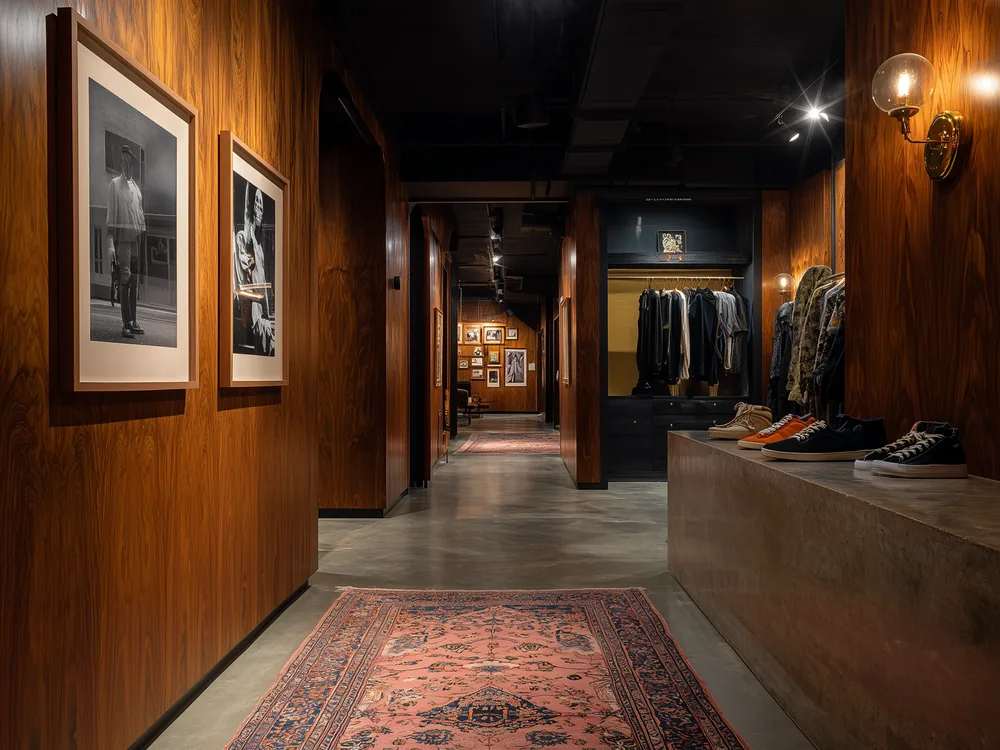
Beside the pieces, a framed image tells where the leather came from, how the stitching is done, who makes it. The story sits at the same height as the product and reads like a plate in a book.
03
A jeweller or an eyewear house takes a corner for a collaboration. It is set up on Friday, it is gone on Monday, and nothing was printed or drilled for it.
What Studio orchestrates here
The object is only half of it. What makes it usable at scale is being able to decide, once, what appears where and when.
What changes
The cost of printing and its logistics disappears, and so does the delay. A campaign that took three weeks to reach a window now takes an afternoon, which changes what the merchandising team is able to attempt in a season.
The point is not to add a display to the boutique. It is to obtain the flexibility of a display while keeping the room exactly as the architect drew it.