Spaces / Hospitality

Change what every room shows, from your desk.

The problem

Years of work, undone by one bright panel.

A hotel is built over years. Someone chose the stone, someone spent a season on the warmth of the lamps, someone argued about the exact grey of the corridor carpet. Then a bright panel goes up beside the lift, and in one evening the atmosphere that took all that work is gone. The surface meant to serve the property is the one thing guests notice for the wrong reason. Most groups end up choosing between saying nothing at all and saying it badly.

Three moments

Concretely, where it lands.

01

The lobby, through the day

At seven in the morning the wall carries a landscape and the breakfast hours. By six in the evening it has become the bar, the pianist, the terrace. Nobody touched anything: the sequence was written once and it runs on its own.

02

The corridor, at the right moment

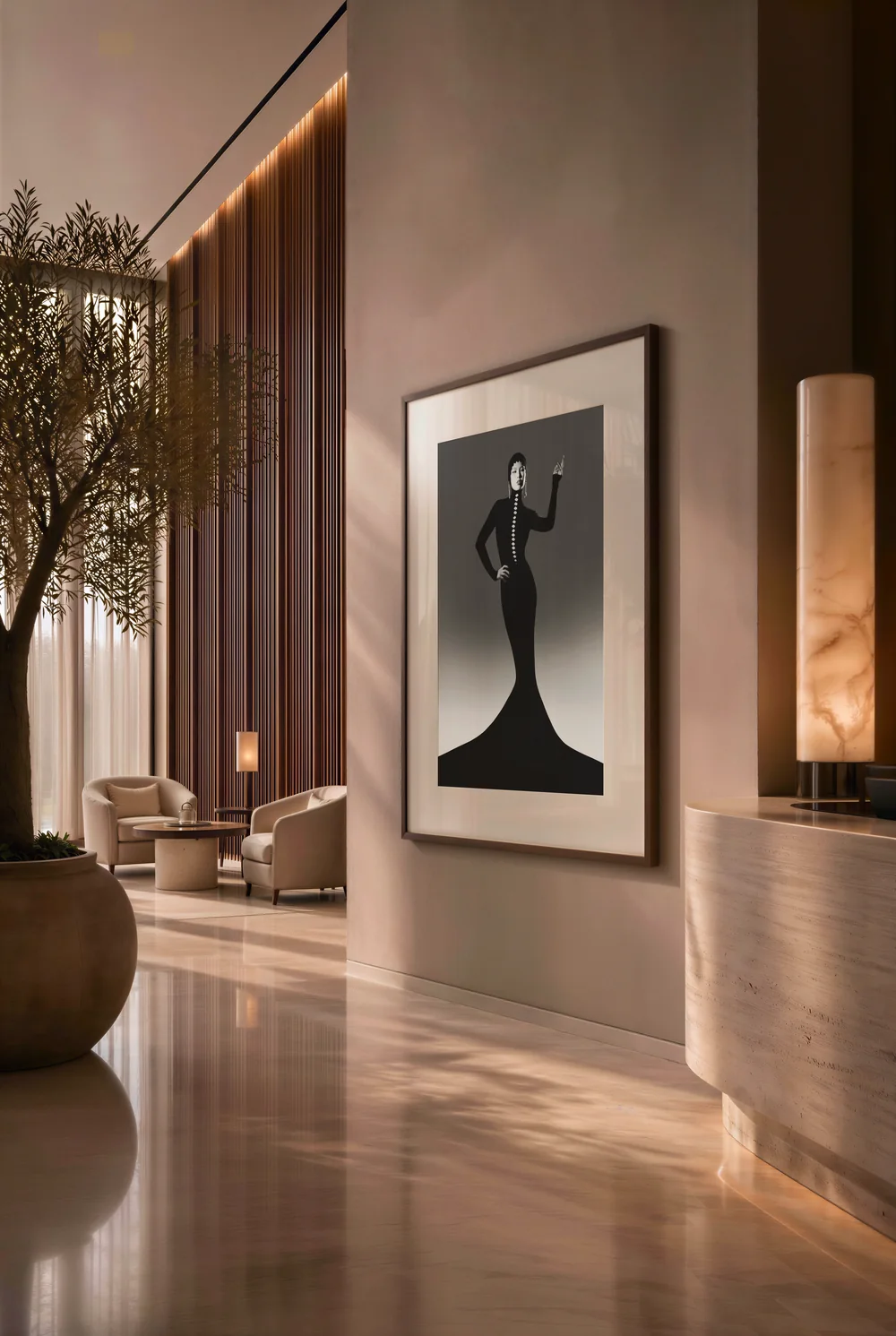
A guest walks back to the room after check-in and passes a framed image of the spa, with the one treatment that still has a slot this afternoon. It reads as part of the decor, not as an advertisement, which is exactly why it works.

03

The suite, made personal

The frame facing the bed carries a welcome in the guest’s own language, or simply a photograph chosen for the kind of stay they booked. A returning guest sees something different from a first-time one.

What Studio orchestrates here

One window, the whole estate.

The object is only half of it. What makes it usable at scale is being able to decide, once, what appears where and when.

  • Group by floor, by wing or by category of room, and publish to a whole zone at once
  • Schedule the day in advance: check-in, breakfast, afternoon, evening, late
  • Adapt by guest profile, room tier, language or country of origin
  • Push the same seasonal campaign across every property in the group, in one action

Discover Ginko Studio

What changes

A spa slot filled, a table taken, a suite upgraded.

Every point of contact becomes a discreet source of revenue, and never looks like advertising. A spa slot filled in the afternoon, a table booked at the restaurant instead of outside, a suite upgrade offered at the moment it can still be accepted. The printing budget disappears at the same time, along with the delay between deciding something and showing it.

Hospitality is where Ginko was first imagined, because it is where the contradiction is sharpest: nowhere else is so much money spent on atmosphere, and nowhere else is that atmosphere so easily undone by a single lit rectangle.