01
The headquarters lobby
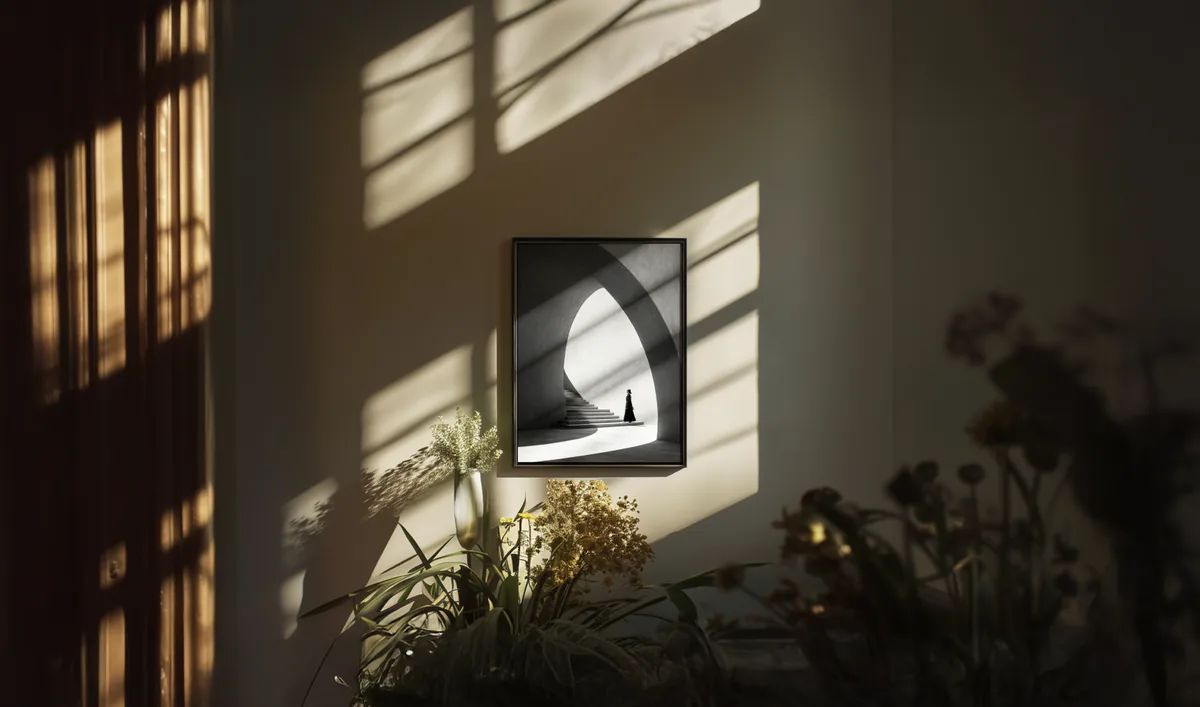
Visitors are met by a framed image rather than a running slideshow. It changes with the season, the campaign or the day, and it never looks like equipment in a space designed by an architect.

Spaces / Corporate
The problem
Corporate signage tends to fall into one of two states. Either it is industrial, a lit panel showing a slideshow nobody has updated since the last rebrand, or it is frozen in print, a framed poster that was correct two years ago. Neither matches the money spent on the building. And the moment a company has more than one site, whatever discipline existed at headquarters stops applying everywhere else.
Three moments
01
Visitors are met by a framed image rather than a running slideshow. It changes with the season, the campaign or the day, and it never looks like equipment in a space designed by an architect.
02
A committee arrives and the room carries their name and their identity, set the evening before. It returns to the company’s own image when they leave.
03
An invited brand takes a floor for two days. The wayfinding, the welcome and the sponsor presence are published in minutes and withdrawn just as fast.
What Studio orchestrates here
The object is only half of it. What makes it usable at scale is being able to decide, once, what appears where and when.
What changes
One identity, held on every site, driven from one desk. The saving is less about print than about consistency: what leaves headquarters is what appears in the regional office, without a phone call and without a local reinterpretation.
In a building where every material was chosen, signage is usually the one element nobody managed to make beautiful. It does not have to stay that way.