01
The treatment corridor
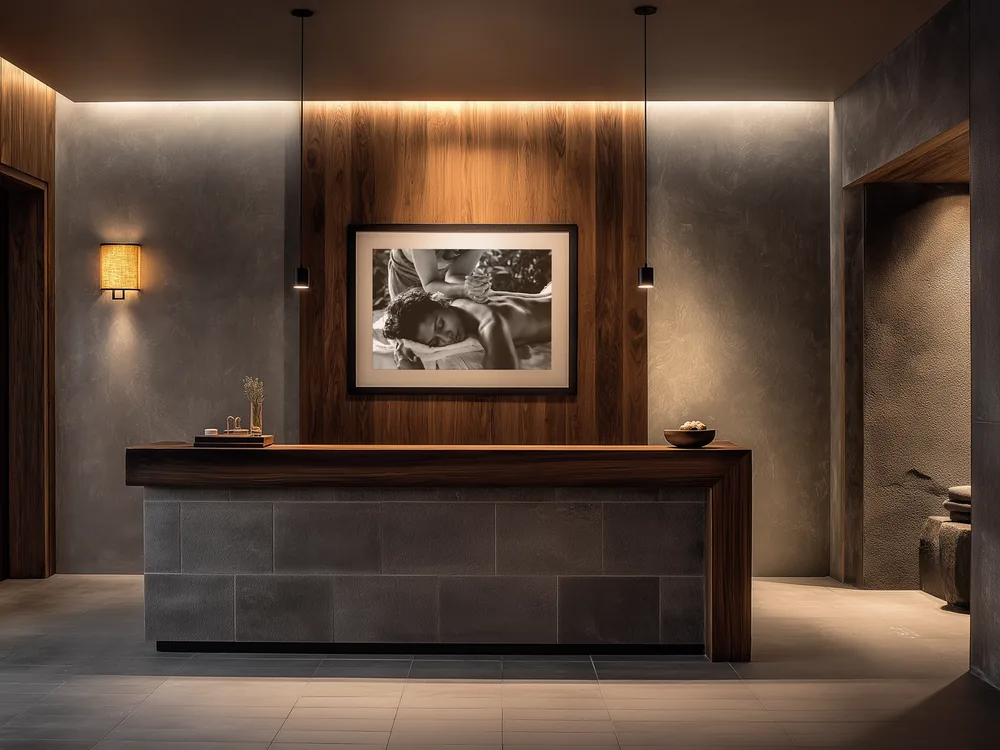
Between cabins, an image holds the register of the place. It changes with the hour and the season, without a glow in a dimmed corridor.

Spaces / Wellness
The problem
A spa sells a state of mind. Everything that emits light, sound or a standby glow works against it, which is why most wellness spaces contain no communication at all beyond a printed card at reception. The result is a place that is beautifully calm and commercially mute: guests routinely leave without knowing what was available to them that afternoon. The paradox is expensive. A spa is one of the highest margin areas of a property, and it is the one where nobody dares communicate, because every available tool would break the very thing guests came for.
Three moments
01
Between cabins, an image holds the register of the place. It changes with the hour and the season, without a glow in a dimmed corridor.
02
A slow, wordless image accompanies the rest that follows a treatment. It is scenery, not signage.
03
One treatment, presented in the afternoon slot that is still free. It is offered once, quietly, and then it goes.
What Studio orchestrates here
The object is only half of it. What makes it usable at scale is being able to decide, once, what appears where and when.
What changes
An additional sales channel that respects the ritual. The measure of success here is not attention captured but attention undisturbed: a treatment sold without a single guest feeling that something was sold to them.
In a spa, an object that draws no power when it is not changing is not a technical detail. It is the reason the object is admissible in the room at all. No fan, no standby light, no faint hum in a room built for silence. When the image is not changing, there is nothing running: what hangs on the wall behaves exactly like a framed print, because at that moment it is one.